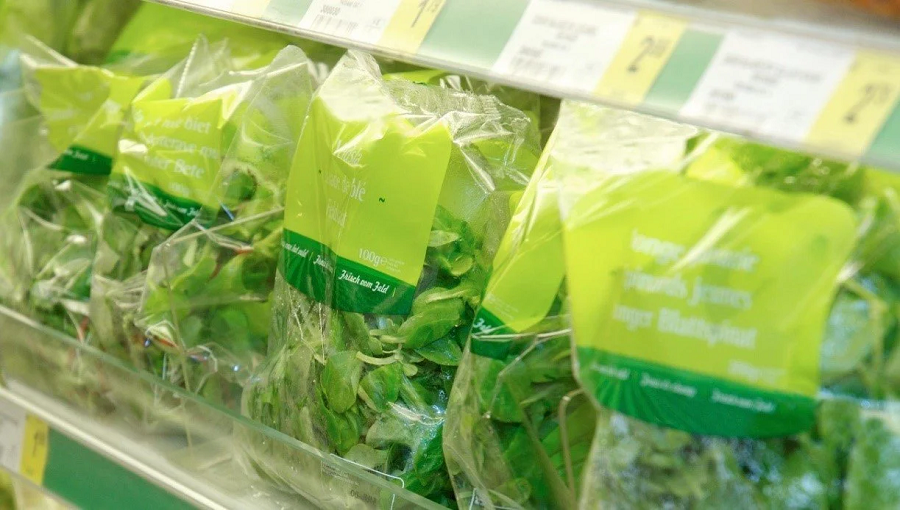
Every year, between 10% and 40% of fresh produce harvested worldwide never reaches the consumer. In industrialised countries, postharvest losses run consistently at 10–20% — driven not by poor growing conditions, but by what happens after harvest: spoilage, mishandling, and inadequate packaging during distribution. For fresh produce businesses under margin pressure, this is not just a sustainability problem. It is a commercial one.
The Science Behind MAP
Fresh fruits and vegetables continue to respire after harvest — consuming oxygen and producing carbon dioxide — and this metabolic activity drives quality degradation over time. A further accelerant is ethylene, a natural plant hormone produced during and after harvest that triggers ripening, accelerates senescence, and can cause rapid quality loss across mixed loads in distribution. Modified Atmosphere Packaging (MAP) addresses both mechanisms simultaneously: by engineering the gas environment inside the package, it reduces respiration rate, suppresses ethylene production, and inhibits microbial decay — all without chemical preservatives.
Research on perforation-mediated MAP for fresh-cut leafy vegetables demonstrates that at optimised storage temperatures, shelf life can be extended to eight days or more. The key variable is precise control of O₂, CO₂ and ethylene concentrations inside the pack — and that precision starts at the perforation.
Why Laser Perforation Outperforms Conventional Film
Conventional permeable polymeric films regulate gas exchange through passive diffusion, but they come with real limitations: constrained permeability ratios, seal reliability issues, and insufficient transmission rates for high-respiration fresh-cut products. Laser microperforated films solve these problems by creating precisely sized gas exchange windows in otherwise gas-tight packaging.
The perforation geometry — diameter, number, and shape — determines the O₂, CO₂ and ethylene transmission rates with a level of controllability that no passive film can achieve. Crucially, the gases mass transfer ratio remains constant across different perforation dimensions, making the system mathematically predictable and enabling packaging engineers to target specific equilibrium atmospheres for each commodity.
Intelligent Systems: Real-Time Vision Verification
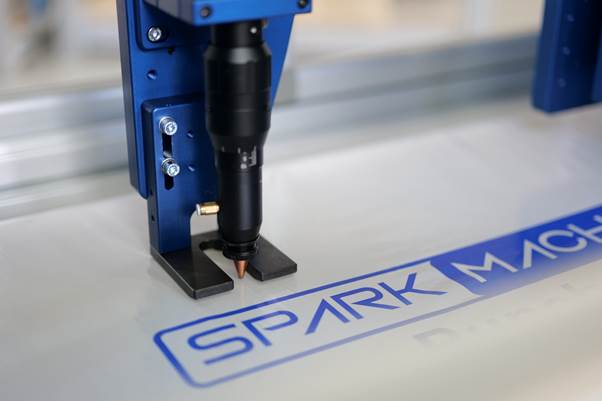
Precision perforation is only valuable if it is consistent at production speed. Spark Machinery’s Laser Micro Perforation Machines integrate on-board camera vision systems that inspect every perforation in real time — measuring hole diameter and shape and verifying quality hole after hole, at full line speed. Any deviation from the specified perforation profile is detected and automatically corrected, before non-conforming material reaches the packing line.
This closed-loop verification transforms laser perforation from a process assumption into a documented, traceable production outcome — a critical distinction for customers operating under retailer specifications or food safety audit requirements.
 The Supply Chain and Sustainability Case
Extending shelf life is both a quality and a sustainability story. Every additional day of commercial viability reduces the probability that a pack ends its journey as waste. Laser-perforated packaging also integrates naturally with mono-material and recyclable formats — because perforation handles the gas management function, it reduces the need for complex multi-layer laminates that are hard to recycle.
Across the supply chain, the benefits compound: longer shelf life enables larger distribution radii, fewer deliveries, leaner inventory, and more efficient use of refrigerated logistics. For retailers, it means less shrinkage and higher on-shelf availability. For growers and packers, it means access to more distant markets and stronger commercial leverage.
Want to explore how Spark Machinery can extend shelf life and reduce waste in your supply chain? Visit sparkmachinery.com or contact our team for a tailored technical consultation.