

From wheelie bins to outer space, creative director, Kevin Lan of Design Bridge and Partners, reflects on the lasting design power of the Made in Britain mark – which is now recognised by 49% of UK adults
More than a decade after its creation, the internationally recognised Made in Britain trademark has become one of the most widely recognised, trusted and reproduced design assets in British industry. The symbol appears on everything from household goods to industrial equipment, and even products sent into orbit.
A new YouGov poll suggests that the symbol is now recognised by 49% of UK adults.
Created in 2016 by Kevin Lan of Design Bridge and Partners, the most awarded brand design agency in the world, the marque has achieved a rare status in contemporary branding: it has become a symbol that operates seamlessly across sectors, scales and contexts, while maintaining immediate recognition and clarity of purpose.
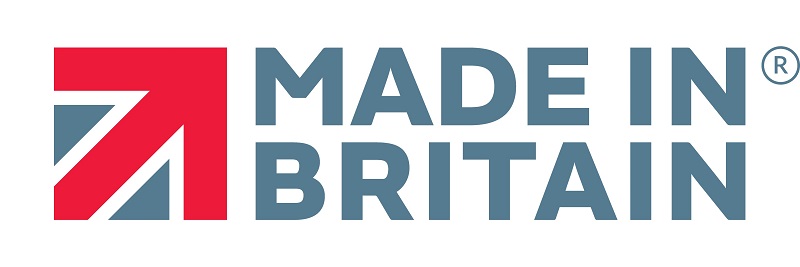
Originally developed before Brexit, at a time when British manufacturing provenance was undercommunicated, the logo was conceived not simply as a badge, but as a functional design device. Its distinctive arrow form, derived from the geometry of the Union Jack flag, was intentionally created to point directly to British-made products in retail and commercial environments, transforming it into a tool for communication as much as identification.

Kevin Lan, Creative Director of Design Bridge and Partners, said: “We loved the idea that the marque could physically point to the product that was proudly Made in Britain.”
“Part of the beauty of the design is that it’s so incredibly robust, even at varying scales. It can go down to the size of a piece of jewellery and still retain its legibility and be able to be recognised, while you can blow it up really, really big for heightened impact. I like to design with a bit of timelessness so it feels more future-proofed, which we definitely achieved here.
“Now, a decade later, it’s easily the most reproduced logo I’ve ever created. I see it everywhere.”
The Made in Britain identity was built to sit alongside existing brands, rather than compete with them, allowing it to flex across sectors and scales while maintaining clarity. Its simplicity and restraint have enabled it to remain consistent and recognisable more than a decade after its creation.
The YouGov survey of 2,000 UK adults found that as well as 49% recognising the symbol, 70% would be more likely to buy a product that displayed the logo. Given that the logo is solely used on products that are independently verified as being made in the UK by manufacturers that follow Made in Britain’s strict eligibility criteria, it is seen as a clear mark of quality as well as origin.
Design Bridge and Partners, the WPP-owned global brand design agency that created the visual of the marque, is widely regarded as one of the most awarded and influential agencies in the design industry. With 800 creative minds across 12 studios worldwide and a client roster including the BBC, Coca-Cola and Mastercard, the agency has built a reputation for shaping some of the world’s most recognisable brands. Its work has earned major global honours, being named Design Agency of the Year at the Pentawards, Creative Review and FAB Awards 2024.
John Pearce, CEO of Made in Britain, said: “I’m delighted that the Made in Britain trademark is so instantly and easily recognisable, and that’s a testament to Kevin and his team’s expert eye and acuity. It’s no small feat to condense an entire mantra into a logo, but Design Bridge and Partners have done exactly that.
“From everyday essentials like wheelie bins created by Craemer UK Limited through to premium quality leather goods handcrafted by Firelog Ltd, the Made in Britain mark is as versatile as it is potent, and our growing community of British manufacturers that bear the mark are adding to that every single day. It’s even been into space!
“With over 2,200 members across the breadth of British makers, the marque sits proudly on a variety of UK-made goods as a signpost for consumers to denote that the product they’re holding was made in Britain, lowering carbon emissions compared to overseas imports and feeding revenue back into our economy with every pound spent.”
The trademark’s clarity and adaptability across sectors continue to support a growing network of manufacturers using the mark to signal verified British provenance across domestic and international markets.
Today, with thousands of products carrying the symbol and increasing demand for transparency around origin and supply chains, the Made in Britain logo stands as a rare example of design that has moved beyond branding into infrastructure: a visual shorthand for trust, quality and place of manufacture.
As interest in product provenance continues to grow globally, the mark’s influence shows no sign of slowing down, reinforcing the role of thoughtful, functional design in shaping how industries communicate identity at scale.


