

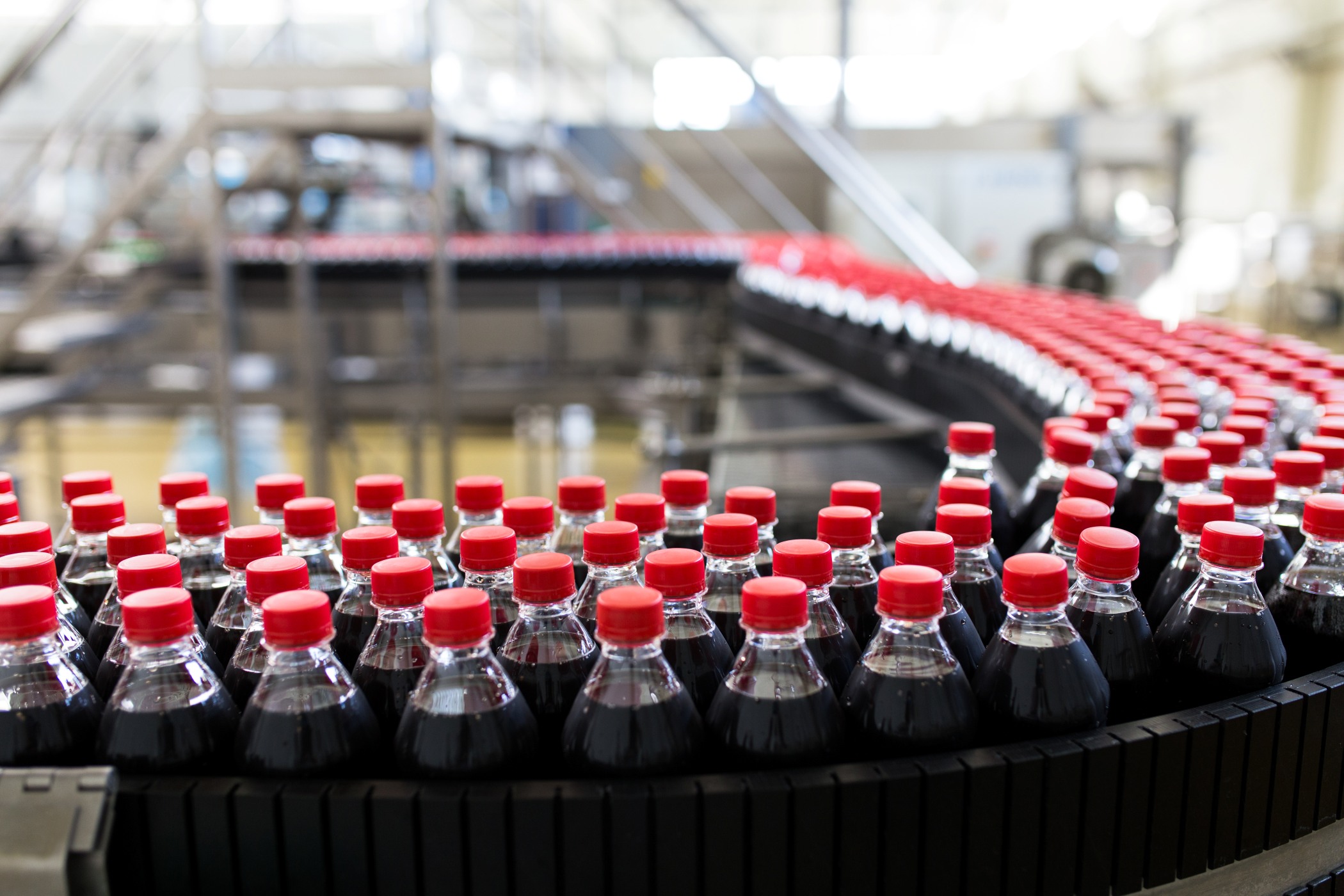
The packaging industry is undergoing a significant transformation. Consumer expectations are shifting from mass-produced uniformity to personalisation, seasonal customisation and premium experiences – and this is forcing businesses to innovate. Whether it’s face cream in a Christmas gift pack or a personalised label on a bottle of soft drink, packaging lines must adapt to changing needs. Unifying control will be key here, explains Simon Hall, Global Market Technical Sales for Food, Beverage & CPG at Beckhoff Automation.
As packaging lines diversify, this places immense pressure on production machines. One week, lines are expected to handle large volumes, and niche product runs the next. Changeovers must happen in minutes rather than hours, with multiple products on one machine. Meanwhile, operators must select recipes for different formats and variants at the touch of a screen, rather than relying on time-consuming manual adjustments or complex engineering interventions.
The problem with fragmentation
When you look at most packaging lines, these are often a patchwork of different control systems. Each machine, whether it’s the filter, capper, labeller or case packer, often comes from a different OEM with its own hardware, software and interface. Manufacturers are also increasingly moving away from single automation vendor models due to the supply chain risk as exposed recently, and the limitation of potential innovations. This means each of the machines may also feature a different PLC with a different software platform.
For operators, this can be a challenging task. Instead of running machines, much time is spent navigating multiple interfaces and diagnosing faults that are either mechanical or software driven.
For maintenance teams, this fragmentation can be just as frustrating. When multiple vendor technologies are installed on the same line, they must quickly learn the quirks of each and manage different upgrade cycles to ensure long-term asset support without any disruptions to production.
As for automation engineers, things are no simpler. They must understand and support software from multiple automation vendors and OEMs with different software environment and programming styles.
It’s a common misconception that the automation platform denotes the programming language. This is not the case. All vendors support all IEC 61131-3 languages, meaning any of the graphical languages (LD, FBD, SFC) and textual languages (ST, IL) can be used on any platform.
The choice of programming language(s) is left to the OEM, allowing the machine’s logic to be implemented entirely in graphical ladder logic, structured text, or a combination of both. This potential variation clearly provides a challenge for engineers to understand and maintain multiple systems.
The case for unification
Believe it or not, unification isn’t about choosing a single control vendor. It’s about standardising interfaces and data so that packaging equipment from different suppliers can work together seamlessly on the same line.
In practice, this often means adopting vendor-agnostic standards and communication methods. For example, Packaging Machine Language (PackML) is a standardised architecture that defines common states, modes and PackTags for packaging machines. This enables consistent control, easier integration and simpler maintenance on automated lines.
Similarly, the Weihenstephan Standards (WS) provide universal naming conventions for PLC variables. They can also help engineers rapidly gather data from machines because standard data points, such as power consumption, are consistently named and typed across systems. They are uniform, regardless of whether they are from different machine buildings or use different automation technologies.
At the network level, open, real-time bus systems, such as EtherCAT, allow equipment from multiple vendors to communicate seamlessly, with consistent diagnostics and precise synchronisation. Features like HotConnect and network bridging enable modular machines to accurately synchronise and exchange real-time data without relying on additional non-deterministic network layers, such as OPC UA. The detailed diagnostics of EtherCAT can also rapidly identify cable breaks or EMC interference on a machine or line, helping reduce costly downtime.
The “holy grail” of packaging
For many manufacturers of consumer goods, the “holy grail” of packaging is achieving lot size one. This means being able to produce and package a single customised item with the same efficiency as a mass-produced batch.
Coca-Cola’s “Share a Coke” campaign, where bottles had people’s names printed on the labels, showed the power of packaging when marketed to the individual. Whilst this isn’t true lot size one, as many multiples of each name were produced, this successfully demonstrated how personalisation can elevate the customer experience.
Brand awareness and loyalty is harder than ever to build with increasing market saturation, so new levels of personalisation and premiumisation possible with lot size one are seen as a key market differentiator. It also allows manufacturers to capitalise on evolving e-commerce channels where direct to consumer sales enable fully customised products tailored to the consumers preference and increase further promotion via customer’s social media.
At the heart of this vision is serialisation – the ability to assign a unique identifier or code to every single unit. This concept is already widely used in the pharmaceutical and food industry for compliance and traceability, and is becoming more commonplace among consumer goods, too. Ultimately, serialisation is what makes personalisation, seasonal editions and SKU-level traceability truly possible.
To make lot size one and serialisation visible at scale, packaging lines must have more than mechanical flexibility. What really matters is granular, high-frequency data from every machine, seamless synchronisation between modules and simple recipe-based changeovers. Operators must be able to set up a new format at the touch of a screen, without needing a specialist engineer for every minor adjustment. Meanwhile, packaging machinery must be able to handle complex demands while being intuitive enough for operators with more limited skills to use.
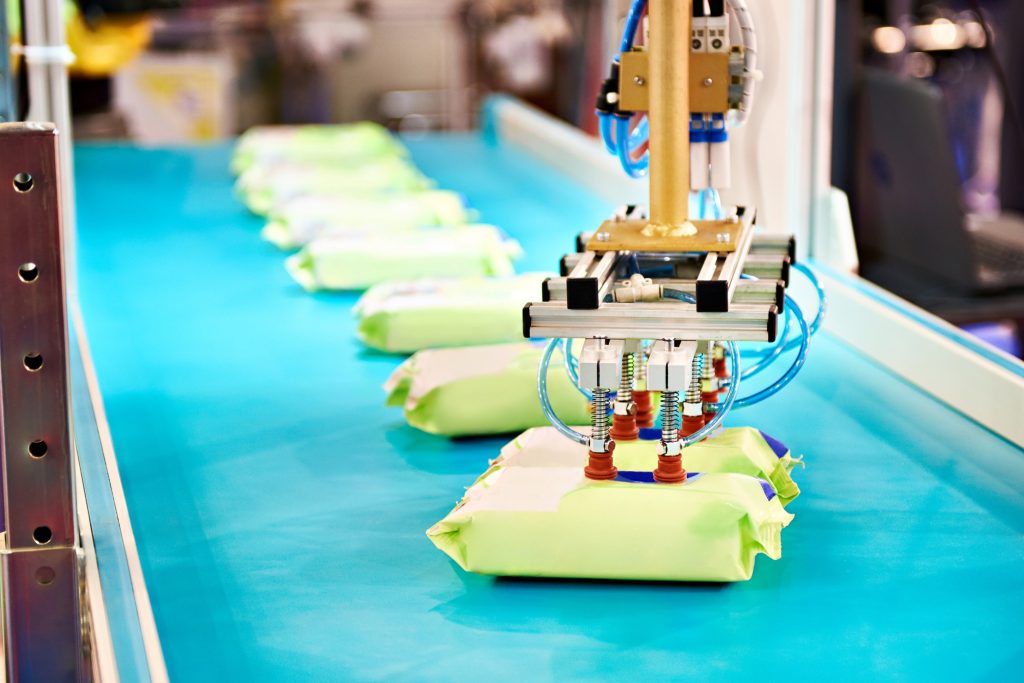
The importance of PC-based control
PC-based control offers a flexible, open approach to industrial automation that can bring significant benefits to packaging lines. Unlike fixed-function PLCs. Beckhoff industrial PCs (IPCs) are built with industrial-grade components and a rugged design, optimized for real-time automation tasks and long-term availability. These IPCs support an open OS philosophy, enabling the seamless integration of third-party software and existing IT expertise, whether on Windows or Linux.
By shifting functions from hardware to modular software runtimes, PC-Based control ensures machine controls are future-proofed to align with changing factory communication strategies. Beckhoff IPCs can connect with any factory system – OPC UA for MES, MQTT for cloud platforms, REST APIs for ERP, or direct access to local and remote databases – without hardware limitations.
EtherCAT networks complement this approach by delivering real-time communication and detailed diagnostics. They can automatically detect issues such as cable breaks, node failures or electromagnetic interference, enabling engineers to pinpoint and resolve problems quickly before they cause unplanned, costly downtime.
TwinCAT software further strengthens this PC-based approach. For OEMs, TwinCAT offers a free PackML library that provides all the ISA standard data types and state-transition functions needed to implement standardised machine states. For end-users, TwinCAT also simplifies integration with companion standards such as the Weihenstephan Standards, using the TF6100 Nodeset editor for OPC UA to match standard XMLs to PLC variables — streamlining setup without requiring deep knowledge of the software.
As well as troubleshooting, PC-based control supports modular, adaptable line design. Packaging modules, such as labellers and fillers, can be connected and reconfigured with minimal disruption, while real-time diagnostics provide visibility across the system. With this flexibility, lines can respond quickly to changing production requirements, upgrades and expansions become easier and consistent performance is assured.
Flexibility, personalisation and efficiency are the future of the packaging industry. Meeting these demands means more than having fast machines – they need unified, PC-based control, seamless communication between modules and standardised frameworks. By combining real-time data, modular design and open automation technologies, packaging lines can handle complex SKUs, rapid changeovers and fully personalised production.
For more information on how PC-based technology can transform the packaging industry, visit the Beckhoff website and download its brochure: Highly efficient, flexible and resource-conserving: PC-based control for the packaging industry.


